

The real difference between Luxor's East Bank and West Bank isn't simply what's located on each side of the Nile — it's how each side feels to experience over several days. This guide explains what both sides are actually like, who tends to feel more at home on each, and what the ferry and transport are genuinely like once you're there. Neither side is objectively better. But for many travellers, the choice ends up shaping the emotional tone of the entire trip.
The real difference between Luxor’s East Bank and West Bank is not simply what is located on each side of the Nile.
It is how each side feels to experience day-to-day.
Some travellers arrive in Luxor wanting convenience, movement, restaurants, larger hotels, and city energy. Others are looking for slower mornings, easier access to the necropolis sites, village life, and a place that feels less dense and less relentless over multiple days.
Neither side is objectively “better.”
They simply create different experiences of Luxor.
For many travellers, choosing where to stay ends up shaping the emotional tone of the entire trip.
Luxor is divided by the Nile.
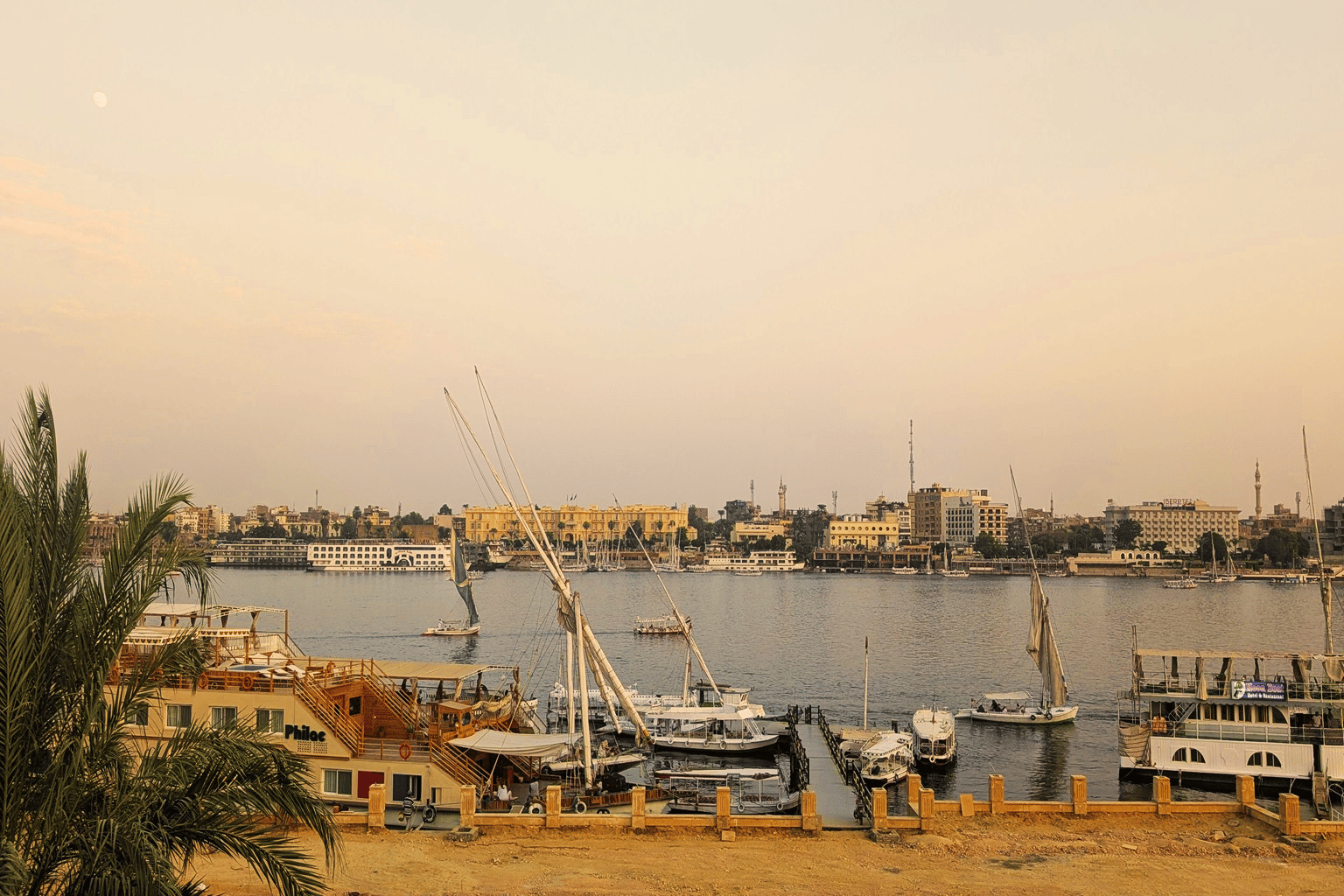
The East Bank is the main urban centre and contains:
The West Bank is where most of the major necropolis sites are located, including:
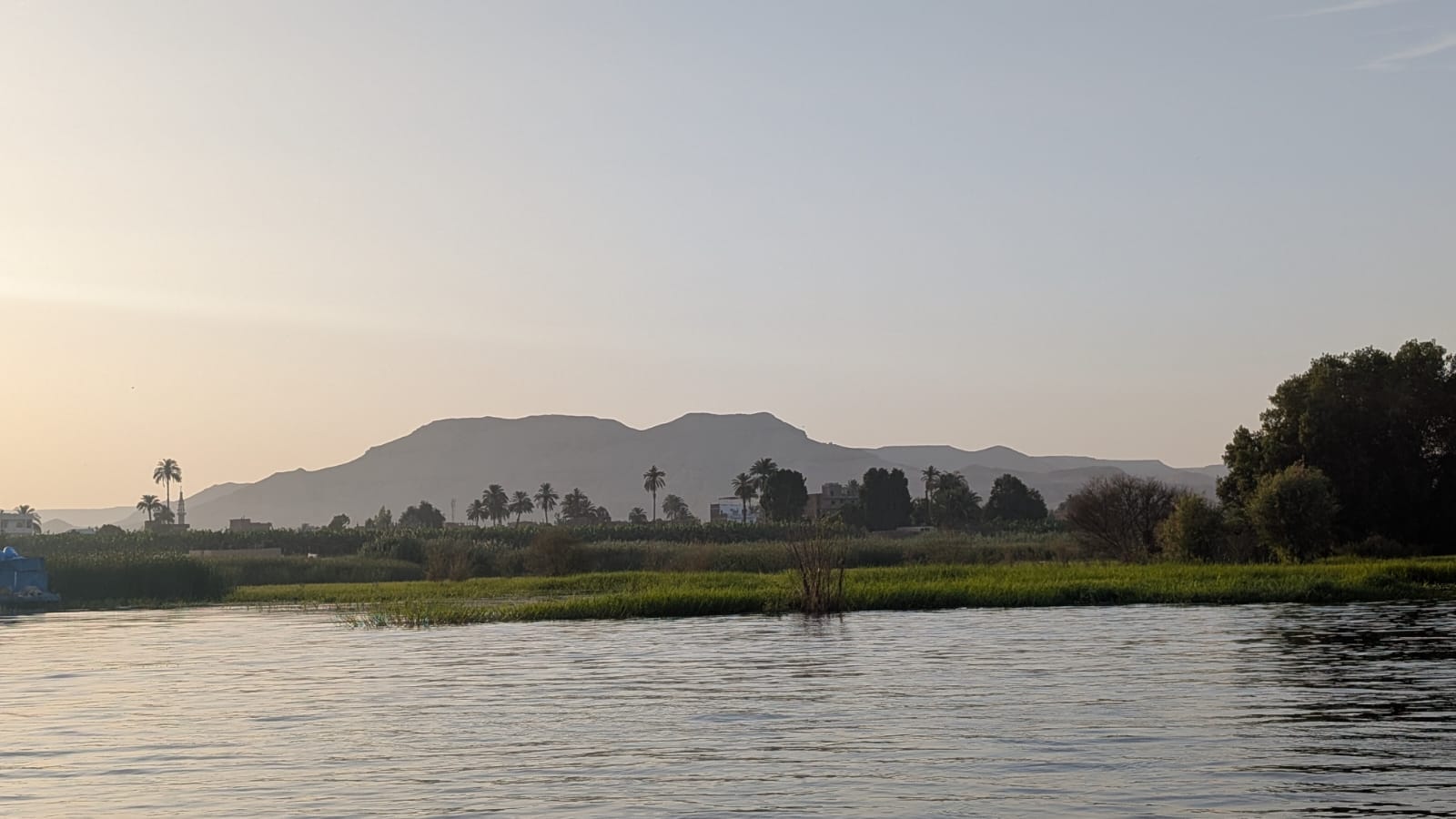
The West Bank is also where many local villages, farms, and agricultural areas are located. Daily life there generally feels more village-scaled and spatially open than the East Bank.
The two sides are connected by:
Crossing between them is a normal part of daily life for both locals and travellers.
The East Bank generally feels:
There are:
For many travellers, that energy is part of the appeal.
You can spend an evening:
The East Bank also offers:
The West Bank feels different.
Not silent.
Not isolated.
But generally less dense and less relentless.
You still hear:
But the overall energy tends to feel softer and more spacious.
Daily life on the West Bank often unfolds around:
You can spend the morning:
For many travellers, the West Bank feels easier to inhabit over multiple days — particularly if they are sensitive to noise, density, or constant commercial energy.
That does not make it “better.”
It simply suits a different kind of trip.
This depends far more on the kind of experience you enjoy than on whether it is your first trip to Egypt.
Many first-time visitors stay on the East Bank because:
If you enjoy:
The West Bank often appeals more to:
Luxor is also still relatively non-digitised compared to many destinations.
Many businesses:
Some travellers find that frustrating. Others find it refreshing.
One of the reasons many people end up loving the West Bank is that it still feels deeply connected to:
It is common to:
For some travellers, that human-scale feeling becomes one of the most memorable parts of Luxor.
Usually not.
The public ferry between the East and West Bank is inexpensive and straightforward once you have used it once.
As of May 2026:
Private motorboats are also available and usually cost approximately:
Many travellers initially worry that staying on the West Bank will feel inconvenient or disconnected from the city.
In reality, locals cross between both sides constantly throughout the day.
The ferry is often full of:
Taxis and tuk-tuks are also inexpensive by international standards.
What can feel unfamiliar initially is not the crossing itself, but the fact that Luxor operates differently from highly digitised destinations. Transport often works through conversation rather than apps.
Once travellers settle into that rhythm, most find the West Bank relatively easy to navigate.
Learn more about staying on Luxor’s West Bank →
If your trip is heavily focused on tombs and temples, staying on the West Bank can save substantial travel time.
The West Bank contains:
The East Bank contains:
For travellers planning multiple days exploring the necropolis sites, the West Bank often feels logistically easier.
It is also worth understanding that the West Bank is not simply a sightseeing zone.
It is an active archaeological landscape.
Excavations and discoveries continue there regularly, and travellers occasionally encounter archaeologists or researchers connected to ongoing work in the area.
That proximity to living archaeology gives the West Bank a very different feeling from simply visiting monuments on a day trip.
The West Bank also contains parts of Luxor that many first-time visitors do not realise exist. One example is the Theban Mapping Project library — a public Egyptology library and research space used by archaeologists, guides, students, and independent travellers with a deeper interest in ancient Egypt.
It is free to visit, and while relatively small, it reflects the broader character of the West Bank itself: less commercial, more residential, and more connected to the ongoing study and daily life surrounding Luxor’s archaeological landscape.
Learn more about the Theban Mapping Project →
Travellers who already find themselves browsing excavation reports, reading about tombs before arrival, or wanting more than a fast-moving checklist itinerary often feel unusually at home on this side of the Nile.
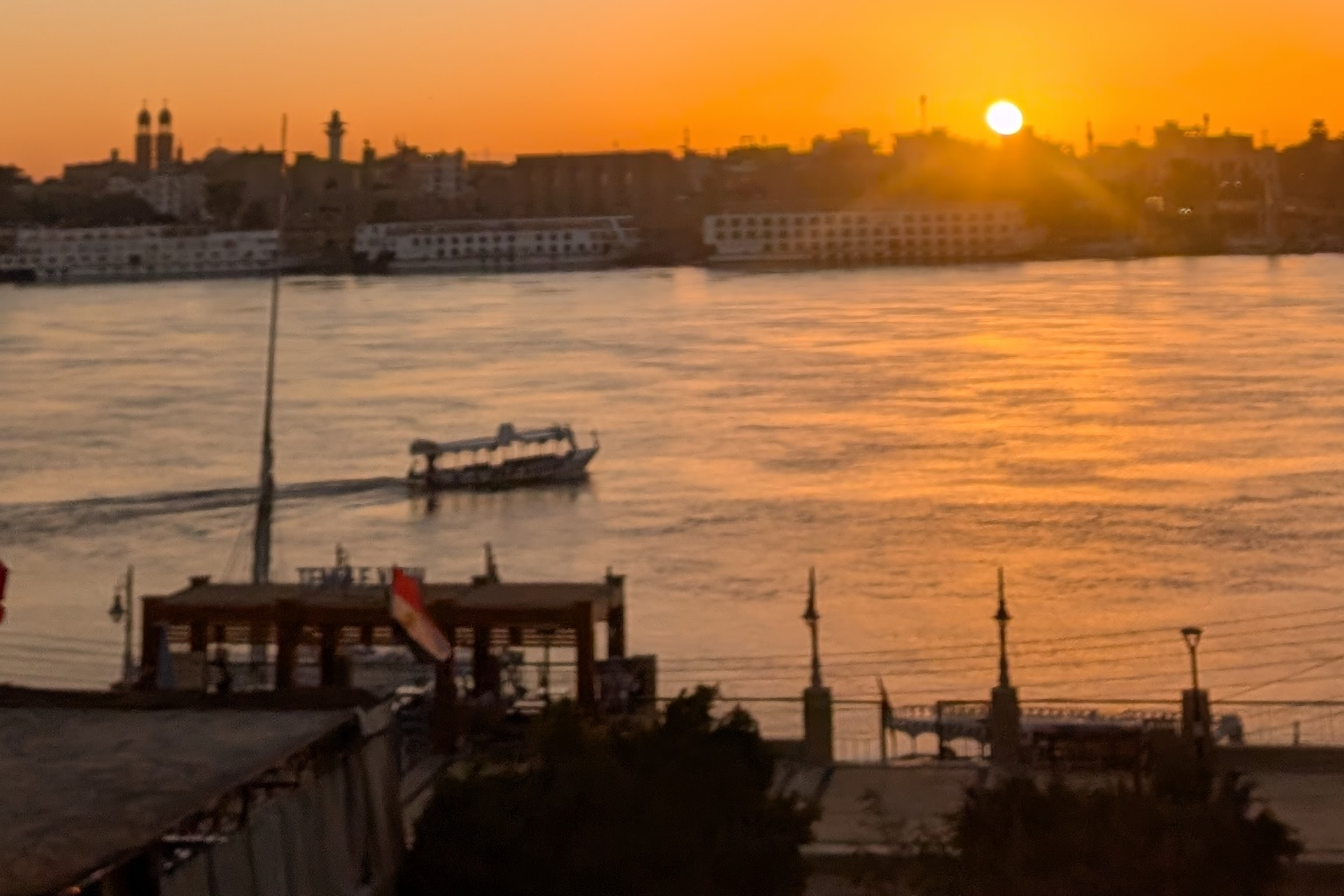
Evenings are where the emotional difference between the two sides often becomes most noticeable.
On the East Bank, the energy generally increases after sunset.
The corniche becomes busier.
Markets stay active.
Horse carriages move through the streets.
Restaurants fill with both locals and travellers.
For many people, this atmosphere feels exciting and social.
For others, it can become tiring after several days — particularly after spending long hours visiting sites in the heat.
The West Bank evenings are usually slower.
Many travellers:
There is less nightlife and less structured evening entertainment on the West Bank.
That is important to understand before choosing where to stay.
But for travellers seeking:
If you enjoy:
If you prefer:
Neither choice is wrong.
The important thing is understanding that the two sides of Luxor create genuinely different experiences of the city.
For many travellers, the best stay in Luxor is not necessarily the most luxurious or the most convenient.
It is the one that feels easiest to inhabit.
To learn more about accommodation philosophy, atmosphere, and what Jalila is building on the West Bank, you can read more about <a href="/stay">Jalila’s approach to staying in Luxor</a>.
Neither side is objectively better. The East Bank generally feels more urban, active, and commercially concentrated, while the West Bank often feels less dense and more village-scaled. The best choice depends on the kind of experience you enjoy.
Usually not. Most travellers find the ferry and transport systems straightforward after the first day or two. The West Bank is active, connected, and easy to navigate once you understand the local rhythm.
As of May 2026, the public ferry costs 25 EGP one-way for tourists. Private motorboats are also available and generally cost approximately 100–200 EGP one-way.
No. The West Bank contains villages, cafés, restaurants, markets, local transport, and major archaeological sites. It feels less urban than the East Bank, but not disconnected.
Many travellers find the West Bank calmer in overall energy because it is generally less dense and less commercially intense. However, it is not silent — daily village life, tuk-tuks, calls to prayer, and local activity are all part of the environment.
The West Bank is generally more convenient for visiting necropolis sites such as the Valley of the Kings and Hatshepsut’s Temple. The East Bank is more convenient for Luxor Temple and Karnak Temple.
Many first-time visitors stay on the East Bank because it contains most larger hotels and tourist infrastructure. However, the West Bank is increasingly popular with independent travellers and visitors seeking a slower-paced experience.