

Luxor is extraordinary and, for many travellers, more demanding than expected. This guide looks at why some people find the West Bank noticeably different to navigate — what that actually means on the ground, where the tradeoffs are, and how to know whether it's the right choice for the way you travel.
The first thing many travellers notice about Luxor is not the temples.
It is the intensity around them.
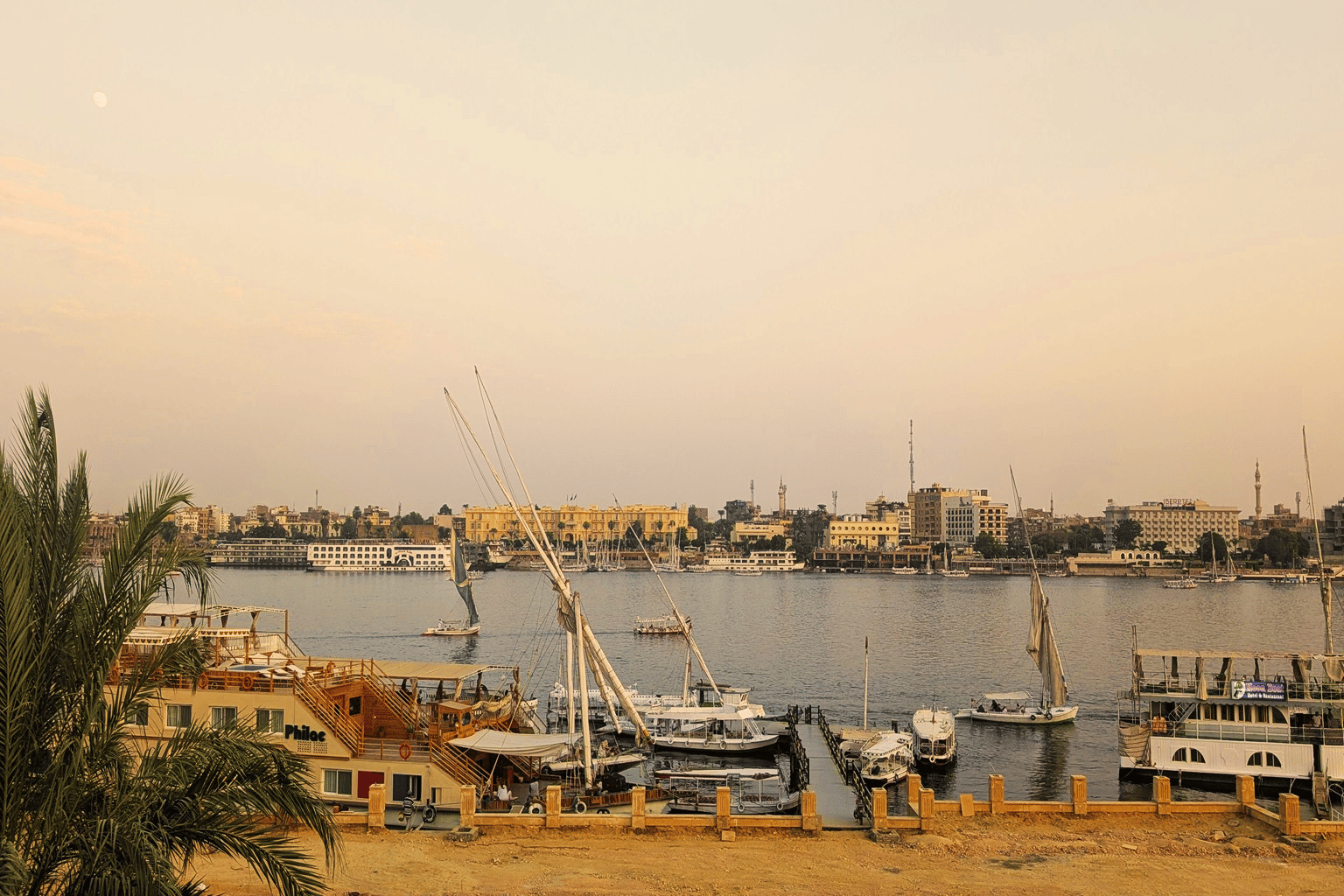
Traffic, noise, cruise ships, persistent sales pressure, and the constant movement of a city built around tourism can make Luxor feel far more active than most people expect before arriving. For some travellers, staying on the West Bank changes that experience noticeably — not because the West Bank is silent or untouched, but because it often feels less dense, more spacious, and easier to settle into over multiple days.
Luxor is one of the most extraordinary historical destinations in the world, but it can also feel surprisingly demanding.
Much of the city's tourism infrastructure sits on the East Bank: larger hotels, cruise ships, busy roads, restaurants, tour traffic, shops, markets, and the main commercial streets. For many travellers, especially those staying only a couple of nights, that concentration of services genuinely makes sense.
But it also creates a particular day-to-day environment. Walking along the Corniche in the evening, offers of taxis, horse carriages, and souvenirs come in quick succession. The main souq and Television Street can feel especially intense for travellers who are not accustomed to persistent vendor interaction or densely commercial tourist environments. Some people enjoy that energy. Others find themselves worn down by it after a few days — not because Luxor has done anything wrong, but because that sustained level of engagement takes a toll.
This is one reason many independent travellers eventually start looking toward Luxor's West Bank instead.
The strongest difference between the East Bank and the West Bank is not the monuments. Both sides give reasonable access to Luxor's major archaeological sites. The difference is the feeling of moving through a day.
The East Bank is denser, more urban, more commercially active, and more immediately convenient. Many hotels face directly onto busy streets, with traffic, shops, cafés, and apartment buildings closely packed together. The pace of movement on the main roads rarely drops.
The West Bank is still active — this is not a rural backwater — but the scale changes. Much of the area is made up of smaller villages, family-run guesthouses, gardens, farmland, and lower-rise buildings spread further apart. The roads are still busy at times: tuk-tuks, motorbikes, taxis, construction equipment, animals moving between properties, and village markets that come alive in the evenings. But there is generally less sustained sensory pressure than on the East Bank, and that difference becomes more noticeable the longer you stay.
Quiet in Luxor does not mean silence, and it is worth being honest about that before you book.
The West Bank is not isolated, retreat-like, or undeveloped countryside. There are calls to prayer five times a day, dogs, local traffic, motorbikes, occasional cruise ship music drifting across the Nile, and periods of active construction as the area continues to develop. If you are expecting a pastoral stillness, the West Bank will not deliver it.
What it does deliver is a different texture of activity. Buildings are spaced further apart. There are more gardens and agricultural areas between properties. Many guesthouses are family-run rather than large blocks built directly onto major roads. The difference is not the absence of activity — it is the absence of constant commercial pressure. That distinction matters more than it might initially sound.
For many travellers, the West Bank feels less like a tourism corridor and more like a place where ordinary daily life is continuing around you, and you happen to be staying inside it.
The calmer atmosphere of the West Bank tends to arrive through small things rather than dramatic ones.
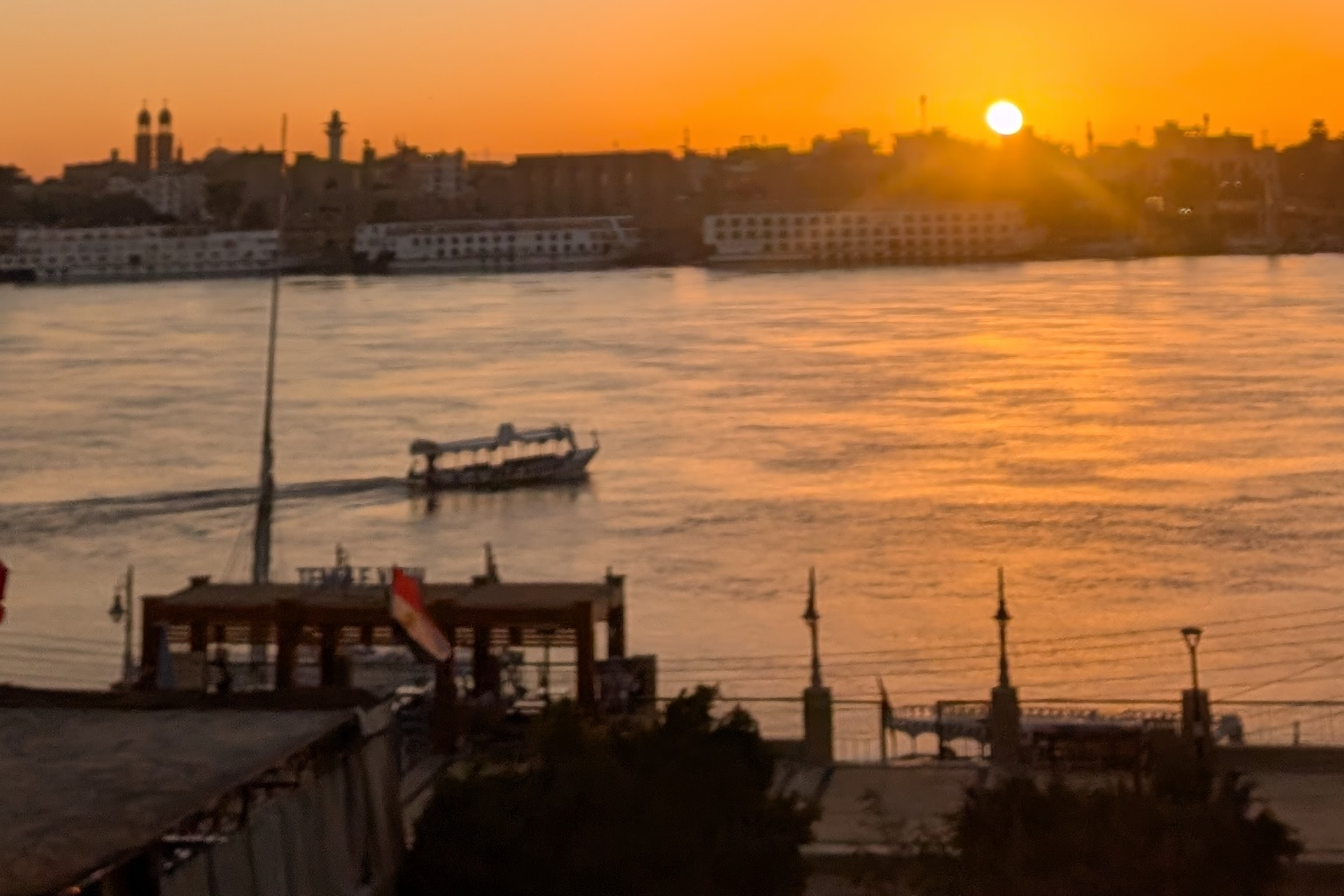
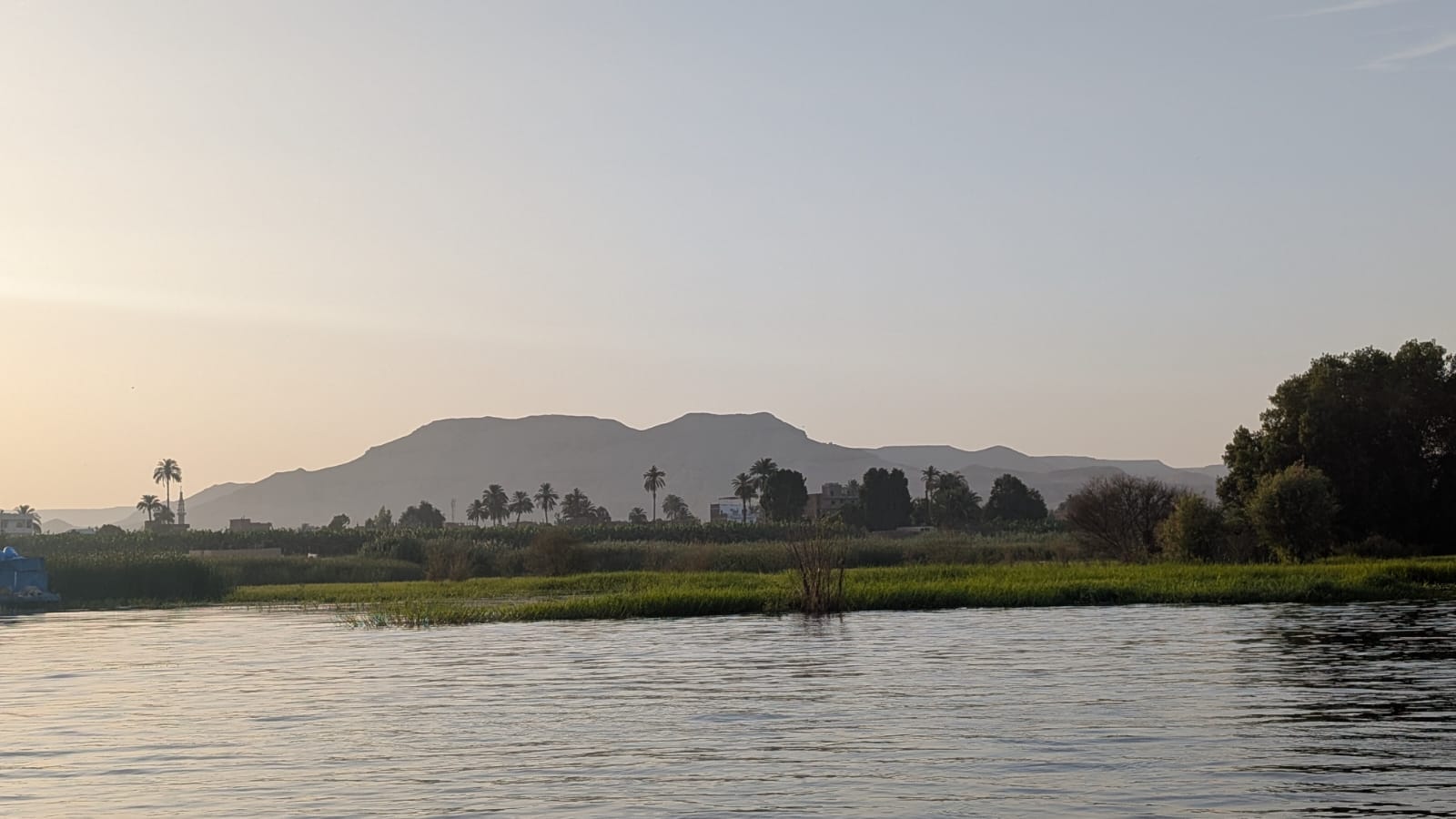
Walking past banana trees on a side road. Driving alongside sugarcane fields instead of continuous apartment blocks. Hearing birds settle at dusk. Watching the sunrise over the Nile before the ferry crossings fill up in the morning. Watching the Theban Mountain turn gold as the light drops in the late afternoon.
Horses, donkeys, goats, buffalo, cats, and dogs move through village streets or rest near farmland. Some guesthouses have gardens with enough space between buildings that you can sit outside without the road dominating the experience.
At the southern end of Ramla, it is still possible to walk through open fields toward the Nile and find stretches of riverbank where people sit alone, fish, read, or simply watch the water. For travellers staying longer than a few nights, these smaller moments often become a meaningful part of what Luxor actually was for them — not just a series of sites visited, but a place they spent time inside.
The West Bank is not the right choice for everyone, and it would not be honest to suggest otherwise.
The East Bank is objectively more convenient for large hotels, denser restaurant options, supermarkets, nightlife, and train station access. Transport on the West Bank requires slightly more planning: the public ferry runs regularly throughout the day and into the evening, but first-time visitors sometimes feel uncertain about relying on ferries, taxis, and tuk-tuks while they are still learning how Luxor works. That uncertainty tends to ease within a day or two, but it is real at the start.
The West Bank can also feel quieter socially at night, particularly outside the busier areas near the ferry landing. And while parts of the West Bank remain agricultural and low-density, development is accelerating — construction, traffic, and tourism infrastructure are all more visible than they were even a few years ago.
For some travellers, the East Bank is simply the better fit. This is not about which side is superior, but about which environment feels easier for you personally to inhabit over the length of your stay.
The West Bank tends to appeal most strongly to travellers who stay for longer periods, travel independently, prefer having quieter evenings, or want more breathing room between activities. It also suits travellers who are interested in experiencing Luxor beyond moving efficiently between archaeological sites — people who want to understand what the place actually feels like, not just what it contains.
Many repeat visitors to Luxor eventually choose the West Bank for exactly this reason: the first trip is about seeing everything, and subsequent trips are about being somewhere.
Travellers looking for nightlife, large international hotels with dense on-site amenities, or maximum convenience for a trip of two or three nights may find the East Bank suits them better. Neither is wrong. The environments are genuinely different, and the right choice depends on the kind of traveller you are.
One of the less expected things about staying on the West Bank is that many travellers stop trying to experience all of Luxor at once.
They return to their accommodation during the hottest part of the afternoon rather than pushing through the heat. They spend longer sitting by the Nile. They stay out to watch the sunset instead of moving to the next site. They walk through farmland after visiting a temple rather than immediately organising the next thing. They begin recognising the same shop owners, ferry staff, café workers, and the particular dogs sleeping in the same doorways each evening.
Luxor itself does not become less active. But the experience of being there starts to feel more manageable — and for some travellers, that shift shapes the entire trip.
If you are thinking about what a longer stay on the West Bank might look like in practice, staying at Jalila is built specifically around that kind of visit.
Generally, yes. The West Bank is usually less dense, less commercially intense, and more spacious in feel than the East Bank. It is not silent — daily village life, local traffic, calls to prayer, and occasional construction are all part of the environment — but the overall level of sustained sensory pressure is lower. Most travellers notice the difference within the first day of arrival.
Not typically, though it depends on your tolerance for uncertainty. The public ferry runs regularly and is straightforward to use once you have crossed once. Tuk-tuks and taxis are readily available. Most travellers find the logistics feel manageable within a day. That said, if you are someone who feels most comfortable with dense infrastructure, multiple restaurant options within walking distance, and immediate access to tourist services, the East Bank may suit you better for a first visit.
Yes, and in some cases more easily. The Valley of the Kings, Valley of the Queens, Hatshepsut's Temple at Deir el-Bahari, Medinet Habu, the Ramesseum, and the Colossi of Memnon are all on the West Bank — you can be at the entrance before the tour groups arrive without any river crossing. For East Bank sites such as Luxor Temple and Karnak, the public ferry or a hired driver will get you there in under thirty minutes.
Many longer-stay travellers prefer it, yes. The lower density makes it easier to settle into a daily pattern rather than feeling perpetually in transit. The proximity to the main archaeological sites also means you can visit early and return during the midday heat without spending significant time in transit. For stays of five nights or more, the West Bank tends to produce a more grounded experience of Luxor.
Independent travellers, repeat visitors to Egypt, those prioritising atmosphere over convenience, and travellers who find high-stimulation environments tiring tend to prefer the West Bank. It also suits people who want to feel like they are living somewhere briefly, rather than passing through. If your priority is nightlife, ease of access to large hotel amenities, or the maximum number of restaurants within walking distance, the East Bank is likely the better fit.