


Designed for longer stays, where things are clear, calm, and quietly taken care of.
Most places on the West Bank fall into two categories:
They are either very basic — inconsistent, unpredictable, and difficult to settle into — or they are beautiful, but priced in a way that makes a longer stay inaccessible.
Jalila sits in between.
Jalila doesn't aim to be the cheapest option, but a place where the experience consistently exceeds the price:
Rooms designed to settle in to, not just sleep in.
Everything working the way you expect it to.
An environment that makes slowing down feel effortless.
The intention is simple: to create a place where you feel at home and so comfortable that you want to stay longer than you planned.
For guests considering a long stay in Luxor, this hotel has been created for you.
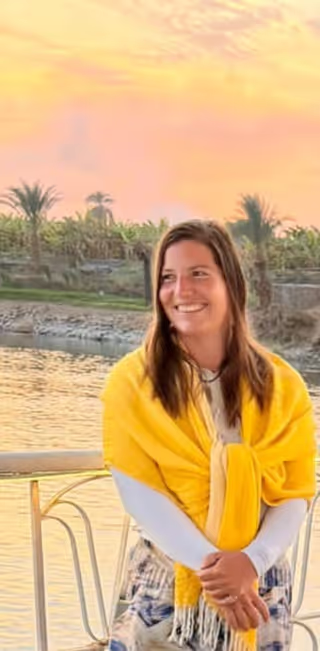
Sarah is Australian, and living in Egypt was not part of her plan. But since arriving in September 2025, Luxor's West Bank has become home.
What she found here — on the West Bank — in the generosity of the people, in the particular quiet of life between the Nile and the mountain — was something she hadn't expected and didn't want to leave.
Before moving to Egypt, her professional background was in product management, quality assurance, and customer experience at Objective Corporation, — the discipline of understanding what people actually need, and building systems that deliver it clearly.
At Jalila, that experience is applied to everything within reach — the communication, the consistency, the quality of every interaction throughout a stay.
This is Egypt: some things will always be beautifully unpredictable. When they are, we're here. The rest is designed carefully.
She focuses on how a stay is structured, communicated, and experienced from start to finish to reduce friction, increase clarity, and create an environment that feels easy to settle into.
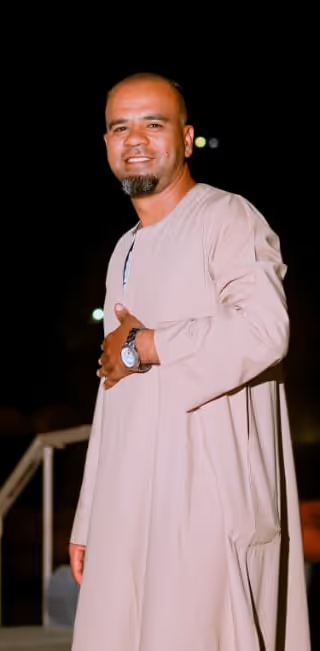
Abdalla is from Luxor's West Bank. He comes from a Nubian family with deep roots in Upper Egypt and the Nile — people who have lived along this stretch of the river for generations.
His love for hospitality started at the age of 14 — before the Corniche existed and when most roads on the West Bank were still unpaved — he started his first business — a small tea and shisha stand near the Nile. He earned a few Egyptian pounds a day. He was building something, even then.
To learn the craft properly, he went to the Red Sea — five years in Marsa Alam and two in El Quseir, working in large resort hotels where he understood how systems, standards, and guest experience come together in practice.
Then he came home. With a friend and five tables, he started his first restaurant on the West Bank. Today, he owns four restaurants with three partners, including Nile Panorama Restaurant near the West Bank ferry terminal.
At Jalila, Abdalla manages local relationships, on-the-ground operations, and the network that connects guests to the West Bank beyond the hotel — working only with people he knows to be reliable, experienced, and genuine.
Abdalla understands that hospitality on the West Bank is built on relationships, not transaction. He focuses on how a stay works on the ground — through people, relationships, and local knowledge.
Sarah and Abdalla met the way things tend to happen in Egypt — through people, through timing, through something that felt less like chance and more like a higher power deciding.
They each found in the other what people here sometimes simply call a white heart — a natural goodness: integrity without ego, generosity without performance, and a natural warmth that simply is what it is. Sarah made Luxor her home. And in Abdalla, she found someone she wanted to build that home with. He felt the same.
What they found was alignment — in values, in warmth, in what they both felt was missing on the West Bank: A place where guests could arrive, settle in, and feel genuinely at home for longer than they expected.
Jalila is family-run in the truest sense: built by two people who chose each other, chose this place, and chose to build something together they both believe in
We focus on what makes a stay feel calm, genuine and deeply connected to the West Bank.
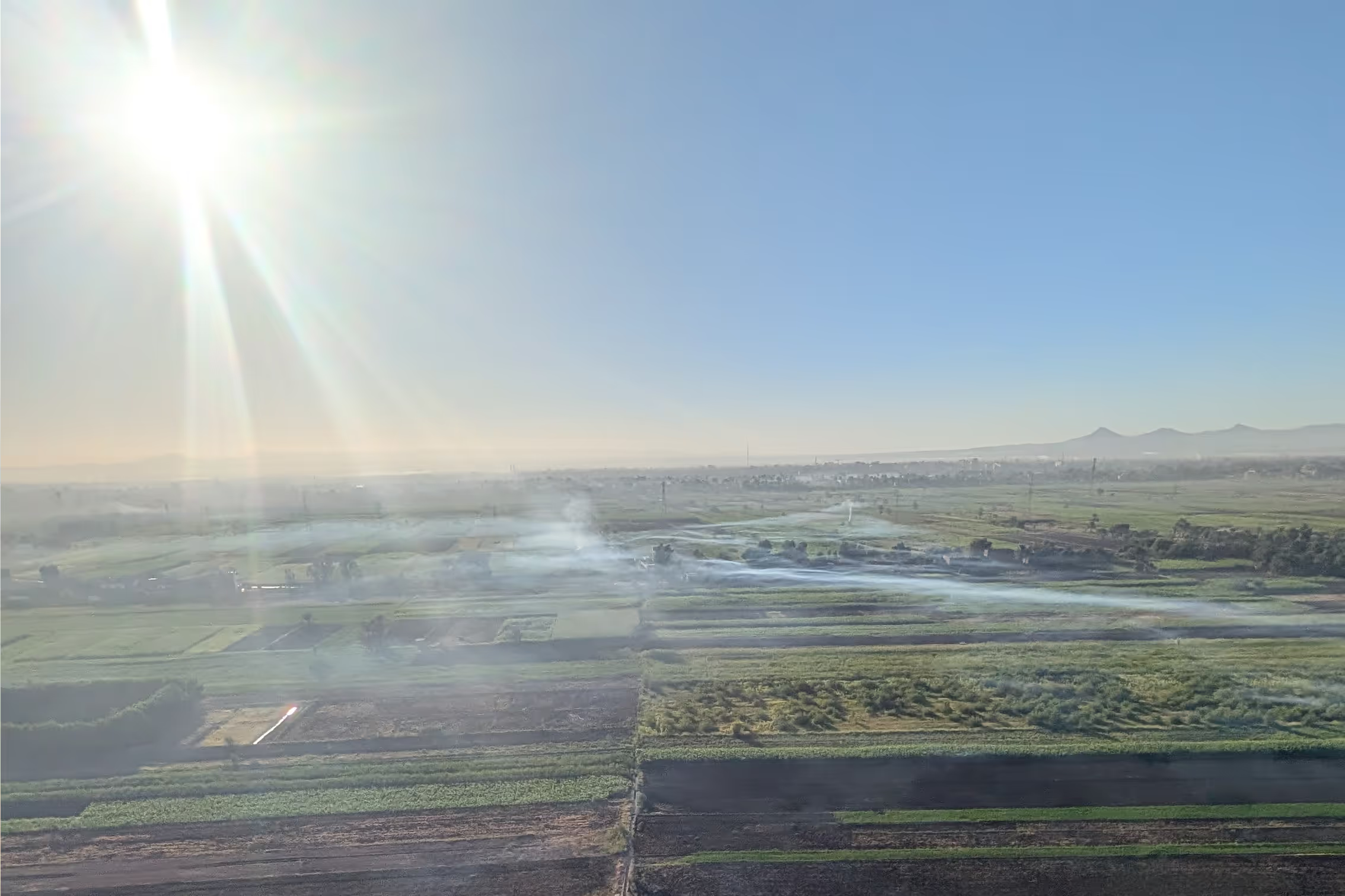
Clean rooms, food made carefully from fresh local ingredients by people who care about what they put on your plate, and information you can trust.
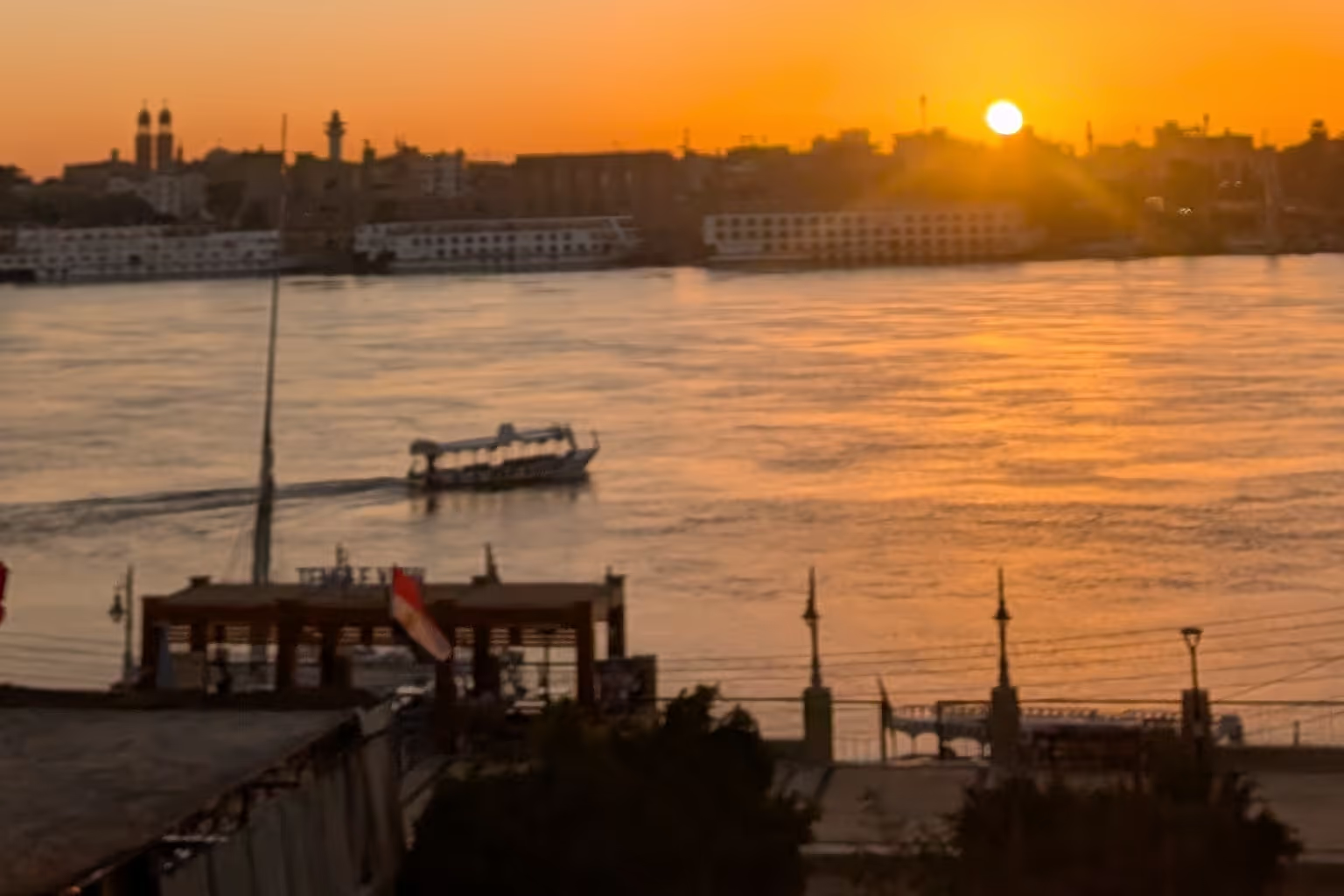
Calm is something we design for deliberately: space to breathe away from the hustle, simplicity, green space — intended to provide a peaceful place for you to relax.
Abdalla's local network makes genuine access possible — not just your average tours, but connections with people and places we know personally and trust.

Hospitality in Luxor tends to be built around logistics. Jalila is woman-led, focused on how you feel when you arrive and throughout your stay.
Jalila (جليلة) is a feminine Arabic name.
It means: great, exalted — dignified, and held in high regard.
It is the feminine form of Jalīl, from a root associated with majesty and quiet importance — something that carries weight without needing to draw attention to itself.
The name reflects the kind of place this is intended to be.
Present, grounded, with a quiet sense of majesty — not imposed, but felt.
The kind of place that holds itself with ease, and doesn’t need to ask for attention.
A place where things are well cared for, where rest is respected, and where you are warmly welcomed.
Jalila is not designed for everyone.
Jalila is the best place to stay in Luxor if you:
If that's you, you'll recognise it quickly.
Jalila is being built intentionally, and opened gradually and with one aim: that when you arrive, it simply works.
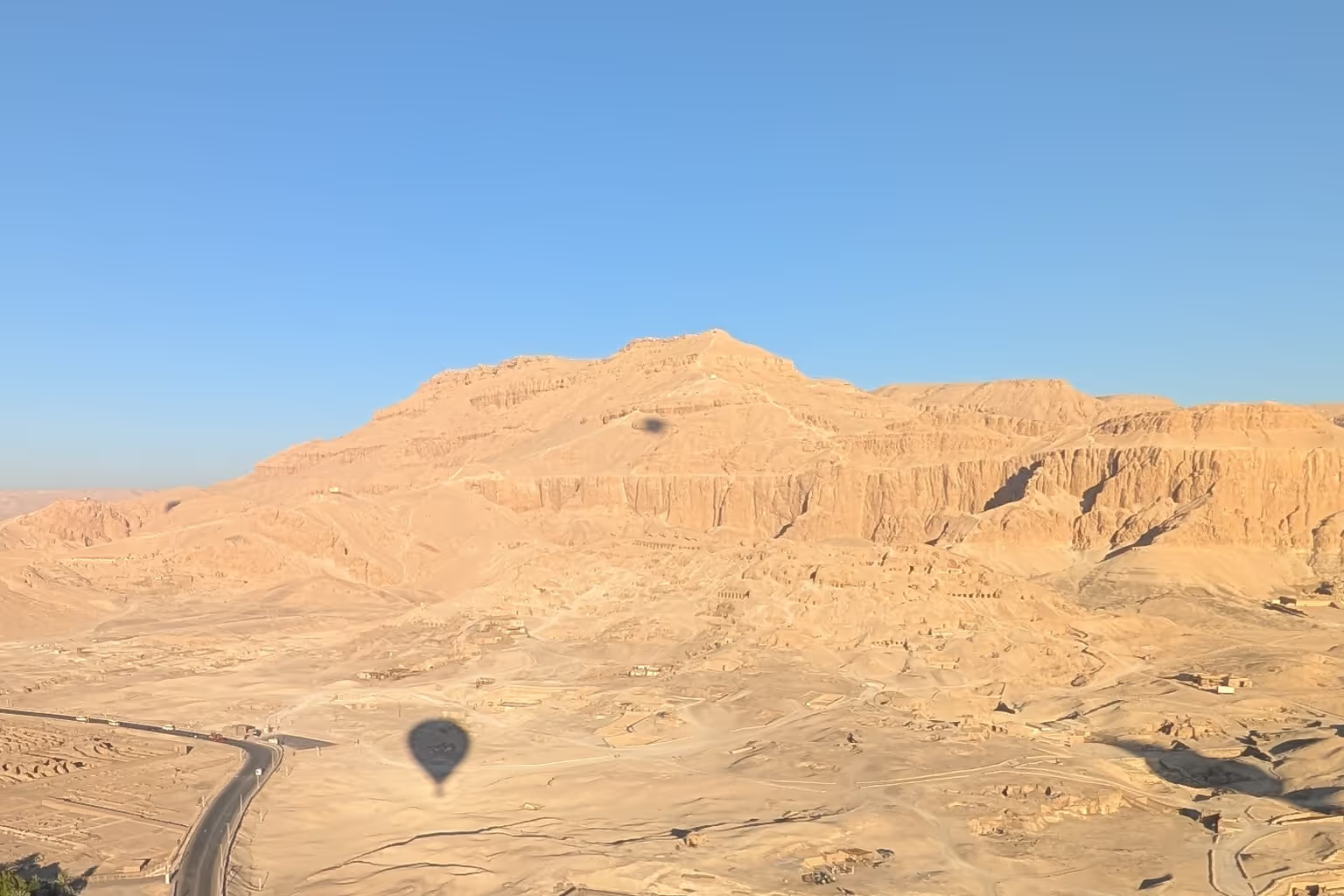
Jalila is located on Luxor’s West Bank, set back from the main road in a quieter, more spacious part of the Theban Necropolis — close to the Theban Mountain and within easy reach of the Valley of the Kings.
Most of Luxor’s major sites are nearby, without the density and pace of the East Bank.
Medinet Habu (Habu Temple) — 5 minutes by car · ~15 minute walk
Colossi of Memnon — 5 minutes by car · ~25–30 minute walk
Valley of the Queens — 6 minutes by car
Ramesseum — 6 minutes by car
Tombs of the Nobles — 6 minutes by car
Hot air balloon take-off sites — 7 minutes by car
Hatshepsut’s Temple (Deir el-Bahari) — 8–10 minutes by car
Valley of the Kings — ~15 minutes by car
For access to the East Bank:
Local ferry terminal — 10–15 minutes by car
Luxor train station — 30–45 minutes
Luxor International Airport — 25–30 minutes
The West Bank is quieter than the East Bank — fewer crowds, slower pace, and closer to the sites themselves.
It is where Abdalla grew up, and where Sarah has made her home.
For travellers who want to understand why the West Bank is the better side to stay on, we explain that in more detail here →
No — Jalila is currently under construction on Luxor’s West Bank. We expect to welcome our first guests in late 2026, beginning with our first four rooms and expanding gradually over time.
Jalila is being built by Sarah Meldrum, originally from Australia, and Abdalla Zalat, who grew up on Luxor’s West Bank and has worked in hospitality across both Luxor and the Red Sea.
We believe the West Bank offers a calmer, more livable way to experience Luxor — especially for travellers staying longer than a few days. It is quieter, closer to the archaeological landscape, and better suited to the slower rhythm Jalila is being built around.
Jalila is a small long-stay hotel being built for independent travellers who value calm, cleanliness, thoughtful design, and reliable hospitality over luxury signalling or resort-style tourism.
Yes. We will help guests connect with trusted local drivers, guides, restaurants, and experiences on the West Bank — working only with people we know personally and trust professionally.
Yes. Jalila is being designed specifically to feel calm, manageable, and welcoming for independent travellers — including solo women travelling in Egypt.


